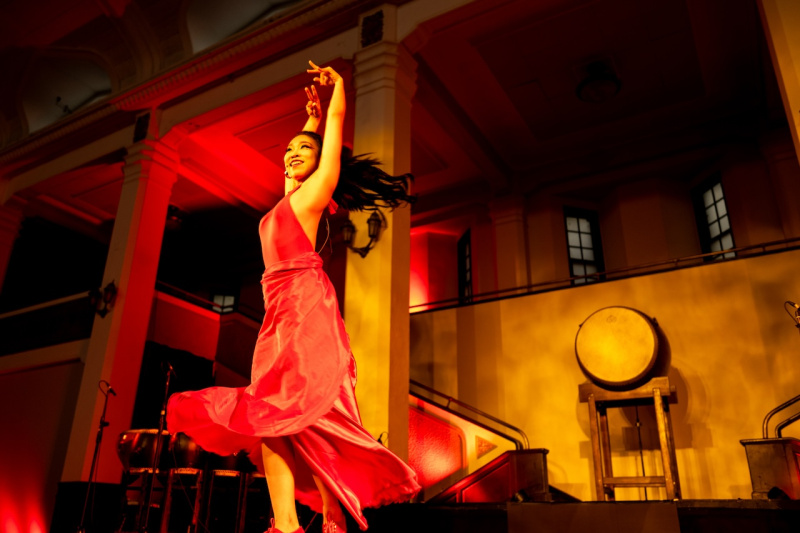
Stella Tsai (Tzu-Hsuan Tsai) is a multidisciplinary performer and creator whose work bridges traditional Eastern rhythmic culture and contemporary performance practices. Rooted in body music, percussion, and cultural memory, her artistic vision explores how ancestral forms can be reactivated through live interaction and modern technology. In Reawaken DONG TSANG, she transforms rhythm into an immersive, evolving language that connects body, sound, and audience across cultures.
CAN YOU TELL US ABOUT THE ORIGINAL IDEA BEHIND “REAWAKEN DONG TSANG”? WHAT INSPIRED ITS CREATION?
The idea of “Reawaken DONG TSANG” emerged from a long-term dialogue between my body, percussion, and cultural memory.
Growing up in a traditional artistic family, Luo Gu Jing was the first rhythmic language I encountered. To me, the sound of the drum is like a mother’s heartbeat, while the movement of the body carries memories that transcend generations.
Through my creative journey, I came to realize that tradition is not something to be preserved in a static form; rather it is something alive, something that can be awakened and felt deeply.
In this work, I reinterpret Eastern rhythmic culture as a contemporary and immersive experience—creating a space shaped by rhythm, where a single beat can bring people closer, transforming cultural differences into resonance.
HE WORK BLENDS TRADITION WITH MODERN TECHNOLOGY. HOW DID YOU APPROACH BALANCING THESE TWO WORLDS?
When creating “Reawaken DONG TSANG”, I did not approach it as a matter of balancing tradition and technology.
What we define as “traditional” or “contemporary” often reflects our own perception. Rather than separating them, I am interested in how they can coexist and evolve within a shared experience.
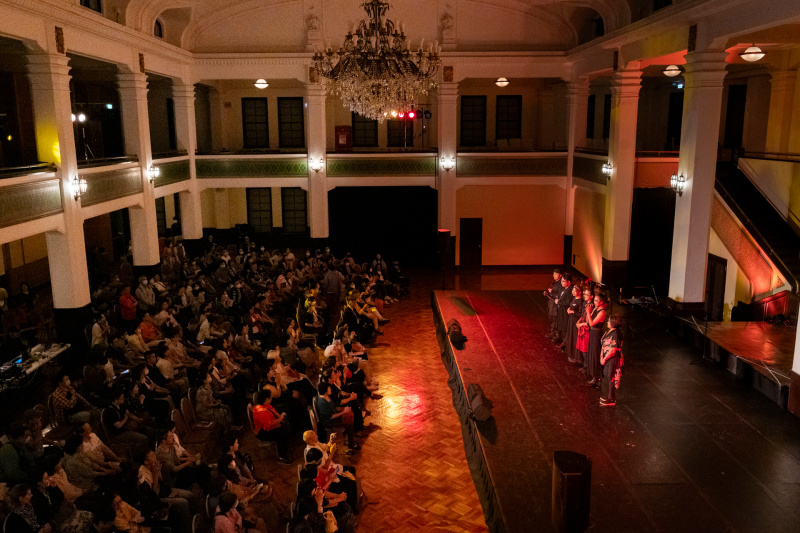
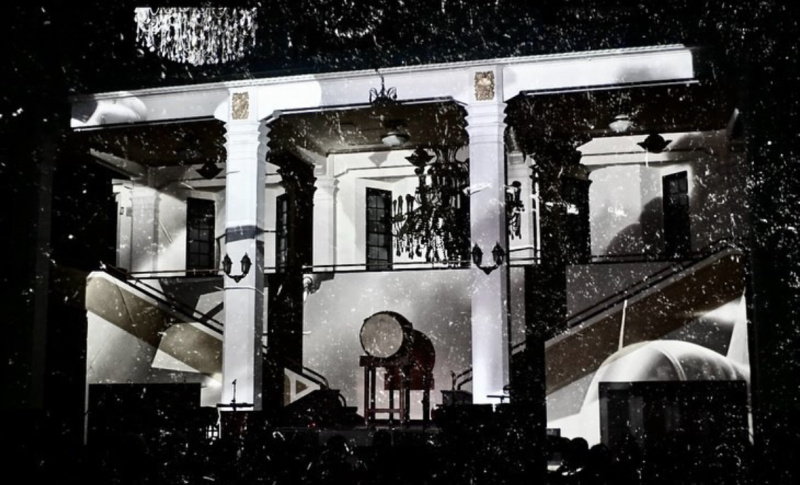
The body is always the point of departure, while technology extends perception. This work unfolds through real-time interactions between sound and visuals—responding to the body and connecting with the audience in the present moment.
For me, the question is not how much technology is used, but whether everything returns to the body—to breathing, movement, and the present moment. Once this connection is established, technology no longer feels like an added component; it becomes an integral part of the experience.
OW IMPORTANT IS THE CONCEPT OF “SING, RECITE, MOVE, AND PLAY” IN SHAPING THE PERFORMANCE?
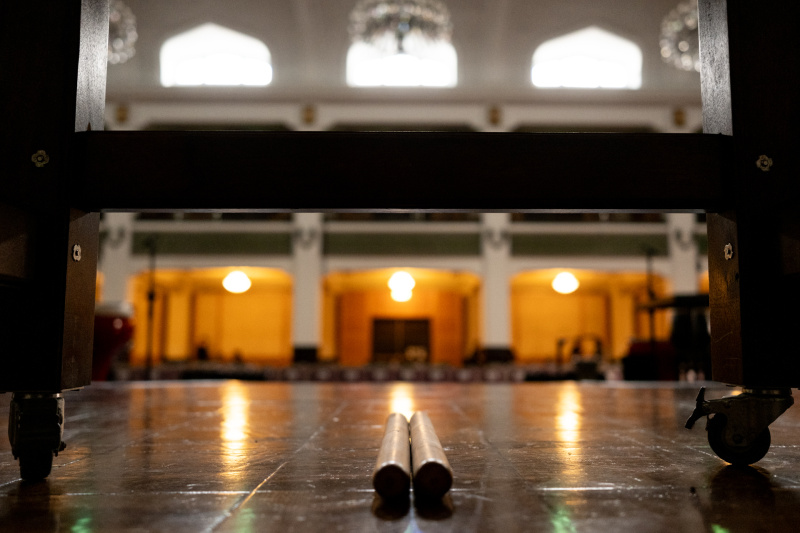
“Sing, Recite, Move, and Play” forms the foundation of both my creative process and performance language.
My work is rooted in the four pillars of traditional performance—*Chang* (singing), *Nian* (recitation), *Zuo* (acting), and *Da* (movement). These are not merely techniques, but a holistic aesthetic framework that shapes how I create and perform.
This perspective extends into my approach to Body Music, where the body becomes an integrative space—allowing different elements to coexist, interact, and transform within a single experience.
HOW DID LUO GU JING INFLUENCE THE RHYTHMIC STRUCTURE OF THE PIECE?
In this work, Luo Gu Jing functions as a shared language.
It is not only a rhythmic system or notation, but also a way of understanding and transmission. When you learn to read rhythmic languages from different cultures, you gain the ability to connect with people—a sense of freedom to move across the world.
WHAT CHALLENGES DID YOU FACE WHEN INTEGRATING NEW MEDIA TECHNOLOGY INTO A LIVE PERFORMANCE?
One of the main challenges was finding a balance between multimedia, lighting, and the presence of the body—especially in designing real-time visuals with a “less is more” aesthetic, while maintaining emotional depth and a sense of human warmth and connection.
We were also working within limited resources and budget.
This process often reminded me of a lyric I once wrote: “Facing the flames of war, we must have steadfast faith.”
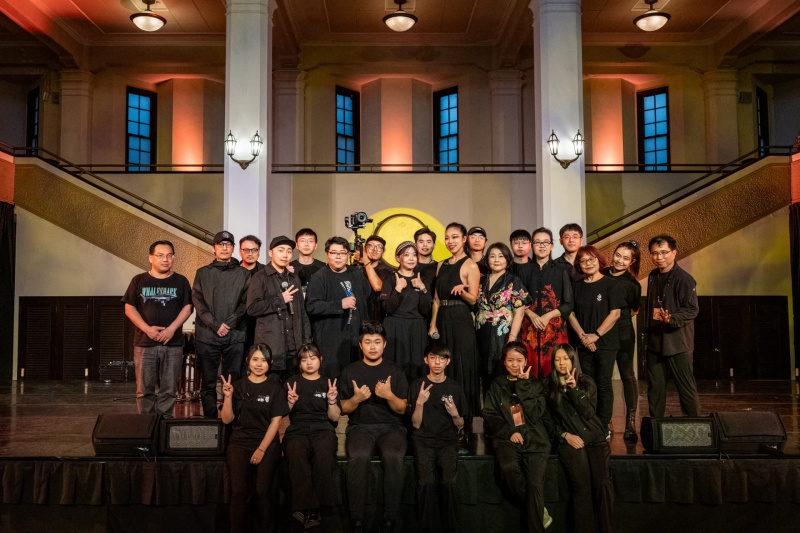
I am deeply grateful to the team. Their holistic perspective allowed us not to see limitations as obstacles, but as part of the creative process.
To me, this journey is a reminder that creation does not only emerge under ideal conditions—it happens when we choose to keep moving forward and believe, even within constraints.
WHAT DOES WINNING “BEST LIVE MUSIC VIDEO” MEAN TO YOU AND YOUR TEAM?
I hope this award becomes a key — one that opens a path for us to step onto the world stage.
At the same time, it is a meaningful affirmation; encouraging us to continue cherishing what we have while exploring the unknown.
WHAT ARE YOUR FUTURE PLANS? WILL YOU CONTINUE EXPLORING THIS FUSION OF WORLD MUSIC AND TECHNOLOGY?
‘’Reawaken DONG TSANG’’ is an evolving and ongoing artistic practice.
I look forward to future opportunities for international touring, as well as cross-disciplinary and brand collaborations, continuing to expand its possibilities.