The music video Letters by Bull Ball started as a playful idea but gradually evolved into an ambitious auteur project that combines nostalgic MTV-era aesthetics, practical filmmaking techniques, and modern digital tools. The director, who also serves as the band’s producer and manager, shares how a DIY concept grew into a complex production, why he still believes in physical sets, and what role music videos play today in both the film and music industry.
How did the initial impulse for the music video Letters come about, and what was the very first visual image you had in mind?
Renátó Bai, the frontman of the band (and also my co-producer in project), was the one who floated the idea - somewhat jokingly or maybe without fully thinking it through - of showing the entire band as Ken dolls. I immediately latched onto it, saying that of course, we could just 3D print their heads and the album cover (Too Late Came Too Soon) was already in progress, which the band's graphic designer (Regina Király) had already sketched out as a top view of a scribbled cardboard box. The connection instantly made sense to me because I like when there are clips that fit into a bigger picture and are intertwined with the band's artwork or any other symbolism, especially if they support a specific album release. One of my favorite examples of this approach comes from the big Mtv (and nu-metal) era is KoRn's - Freak on a Leash music video. Since our band also strongly represents the essence of this era, I deliberately wanted to evoke this more nostalgic atmosphere of music video history in direction, visuals, and tempo.
You originally aimed for a simple DIY approach, but the project grew far beyond that. When did you realize it would become something much bigger?
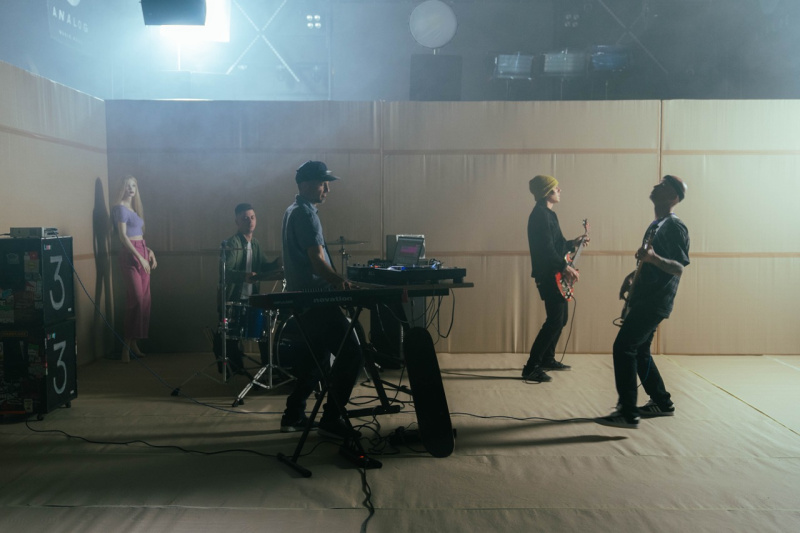
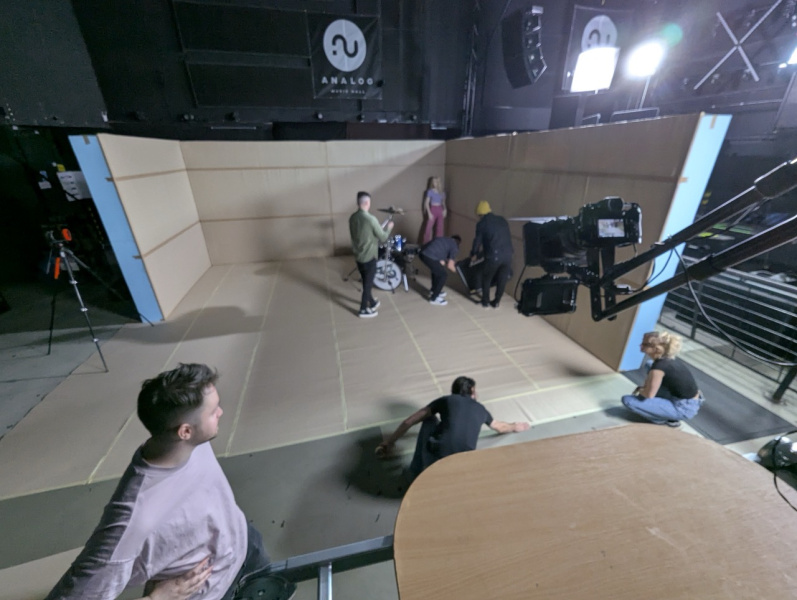
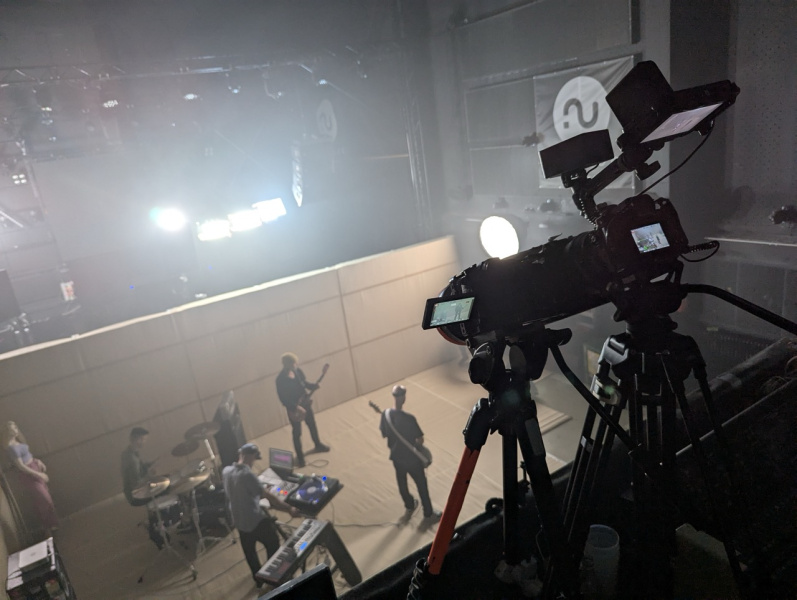
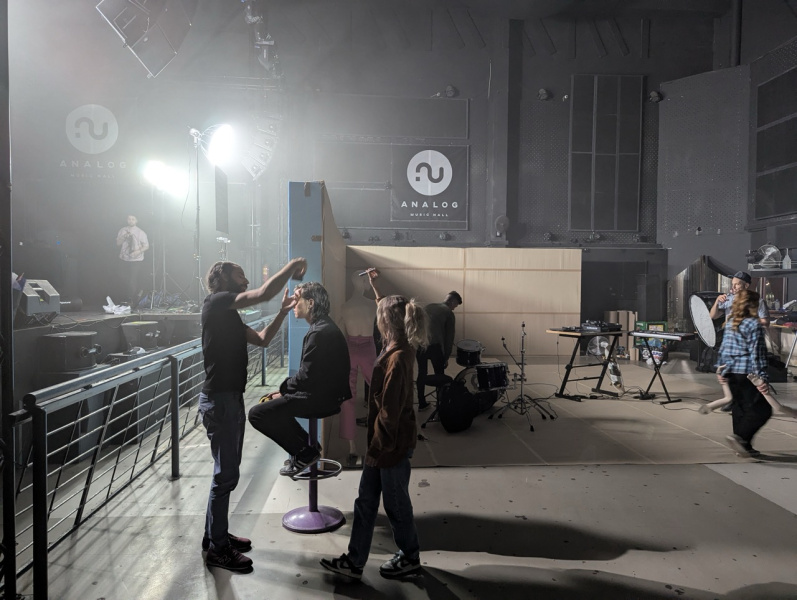
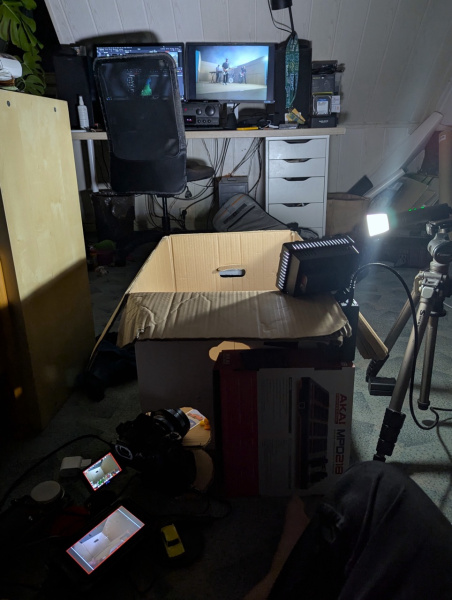
Once I started connecting the core ideas that we needed to film the band in an enlarged box interior set, and then make Ken dolls based on them that our recurring actress/dancer would interact with while looking into a real box, I believed that we could actually make it happen, because the theory and the necessary knowledge are there to do this from our available equipment and other resources in our environment with some additional rentals if needed. I have been directing and cinematographing music videos for 15 years and have produced many music video projects of various sizes and deadlines, but I have always strived to manage with the necessary minimum in terms of the number of crew members and accumulated technical resources. My philosophy is to invest heavily in planning: if you spend twice as long thinking things through, you can often achieve twice the quality with half the resources. Initially, I didn't even hesitate to build the set myself and shoot it without any camera or lighting assistance. Luckily, I realized that this would have led to a collapse, so I asked my old bandmate (Gábor Bártfai), who is also a talented architect, to help me design the set in the most cost-effective way possible and to assist with the actual construction on the set. Of course, the setup itself took half a day. Then, since I was working with two cameras, so that we could cover the set with shot count in time and since the set itself was relatively large, I brought in an old student and friend of mine (Miki Bacskai) to help with lighting and camera assistance.
Building a life-size cardboard set is quite rare today. Why did you choose a physical set over a purely digital solution?
Basically, I always seek to make the visuals of the music videos fit with the world of the music itself, so since this song carries a strong retro feeling, that's why I lean toward classic filming techniques. If the vibe of music represents a super-digital aesthetic, I would have gone in that direction instead. Here, obviously, if I could have done it, I would have shot on 35mm film, but budget and time constraints pushed us toward digital solutions. That said, I find beauty in how classic film methods can be translated into today's much more accessible digital tools.Whenever possible, I prefer practical and optical solutions until the last moment and refine digitally in post-production as a final step.
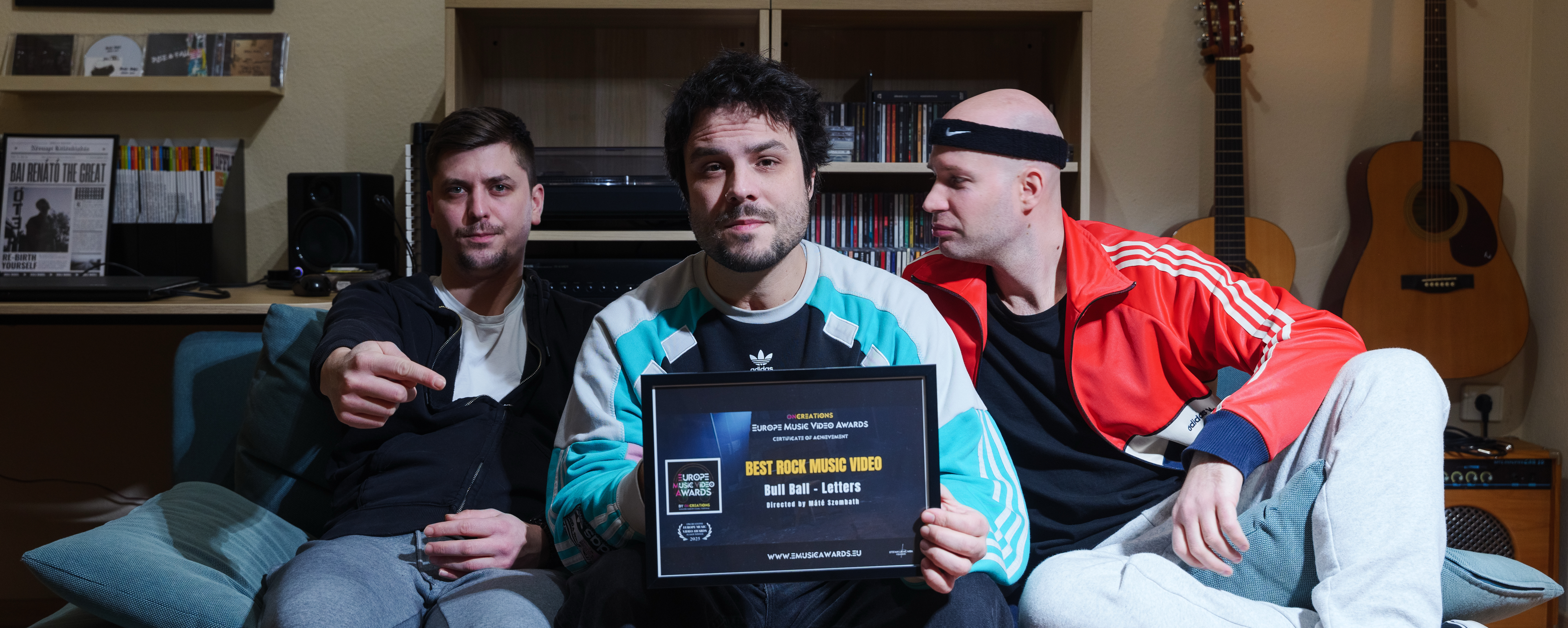
You worked as the band’s manager, producer, director, cinematographer, editor, and VFX artist. What was the most challenging part of this one-man-show process?
This was more of a fulfillment for me than a burden, besides the fact that as the filming approached it was increasingly difficult to keep everything in mind. I was sometimes on the verge of a complete breakdown, but the complexity of it, that I am not simply a director randomly asked by an unfamiliar band for one occasion, but as the band manager I adapt the concepts of the music videos to the communication of an entire campaign.That perspective is incredibly precious, because it forces you to think long-term and represent the band in both creative and practical way. With Bull Ball, our music video and other music-visual collaborative work goes back over 10 years. Evolving from friendship and visual work into full music-industry involvement, relying on my previous band membership experience, and the music industry knowledge and network I gained in music filming.
Outside of Bull Ball, I often combine several creative roles in my music video work, so this setup wasn't entirely new to me. VFX is usually something I prefer to plan in theory and not execute myself, but in low-budget, favor-based projects, you sometimes have no choice. This project was actually financed by Renátó and me entirely from our personal funds 50-50, and even then we asked for a lot of favors.
How important was the support of friends and family, considering that many elements of the project were made literally by hand?
And yes, speaking of favors, I even asked my mother and my fiancée (Glória Jáde Tóth) for help with the styling of the Ken dolls for this project. This meant that we bought the dolls from the second hand toy market together and had to reproduce the outfits in doll size by hand from the band scene that had already been filmed by then, based on the image references. We only had to repaint some of the original Ken doll outfits and accessories. For example, the shoes, and a pair of pants, t-shirts, and a jacket, but the missing pieces of clothing were sewn by my mother. My favorite was guitarist Adrián Várhidi's yellow beanie, which was made from the tip of a McDonald's glove. The baseball cap on Shaman Leva, the band DJ, and a pair of shoes were 3D printed, as were the heads of the dolls, which were made from skin-colored filament based on Gábor Bártfai’s Lidar scans from DAY01, and I finally painted the faces and hair on them.
By the way, Glória and I have already had a lot of joint projects, especially in the setting where she was the production manager and/or assistant director many times, but today we see it as wiser not to combine our professional works.
You combined old-school compositing techniques with modern tools like AI Magic Mask. How do you balance the analog and digital worlds?
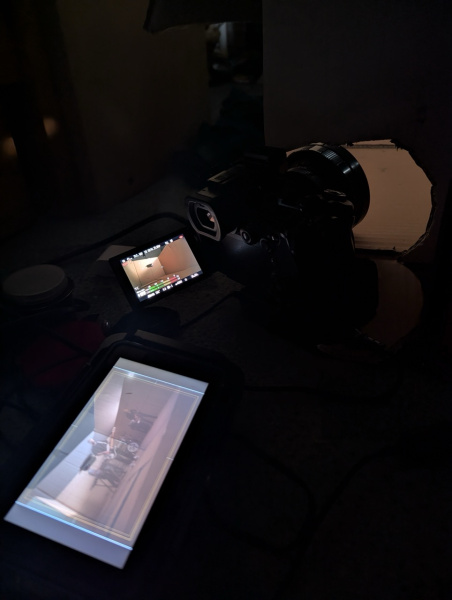
For me, one of the most inspiring documentary series was Light & Magic about ILM, which is about the visual effects studio founded by George Lucas for the 1977 Star Wars movie. This company initially used classic analog tricks, then became increasingly digital, and finally found a field where they can mix the two again. In essence, I grew up mostly on these films, which the ancient ILM had more or less to do with, and this enchanted me even as a child and even then it terribly moved my imagination, how they could create these fairy-tale worlds. Actually, I only did compositing here, where 2-3 layers had to be matched in camera image - choosing optics with good focal lengths accordingly - and roughly sync them in timing. This is a technique that really doesn't make much sense to do with classic analog technology, because it would be matte glass projection, which wouldn't really add to the plasticity of the view and was a destructive lab process anyway. I was helped by the Onion Skin display mode of my Atomos Ninja V recorder-monitor, into which I fed a few still images from the playback footage’s composite shots on the second day of shooting, so that I could semi-transparently align the current camera image with the actress (Dóra Veres) or the apartment backgrounds, and I also shot a few extra life-size toys at home on the bottom of the box in the same way. In post-production, the masking was speeded up considerably by the fact that Magic Mask is now available in DaVinci Resolve Studio, with which I could mask out the moving characters even in moving shots more easily than if I had to track them by hand. I only wish in hindsight that I had a much more powerful video card for this task, because I had to calculate the render until the penultimate moment of delivery and it still didn't feel perfect. A green screen was theoretically an option, but we lacked the capacity and I wanted to avoid green reflections anyway.
How do you see the current Hungarian music and music video scene, what are its strengths and where does it still have room to grow?
I have also consciously stepped back from the music video industry more than in previous years. For example, in 2021 I directed 7 music videos and 3 visualisers, in 3 I only did cinematography work and I also had 2 live session videos and I have been doing this to a similar extent, but in different proportions, all the way back to 2010. So I feel that what I wanted to achieve in the Hungarian music scene with videography, I have already tried, moving within the boundaries of my musical taste. Nowadays, I mostly work with Bull Ball and the instrumental post-rock band TÖRZS, who are also my friends,treating music videos as a relaxed creative outlet. Over the past 3 years, we have worked on an HBO Original music documentary series about a Hungarian rapper (Pogány Induló), which gave me deeper insight into the industry, but also left me more exhausted than inspired. In fact, I think I have also realized and accepted that there has been a generational shift among both artists and directors, which I no longer want to compete with. There are many talented young people in both segments, who now understand each other better. Spiritually, I still belong to the MTV era and I try to direct unwaveringly timeless, memorable pieces, which can be relevant even after years and of course carry some kind of reference-worthy message.
Do you feel that Hungarian bands and directors have enough opportunities to break through internationally
There are rare examples of this, but unfortunately I don't enjoy the possibilities of this yet. From what I've observed, many of those now working internationally benefited from being active during Vimeo's golden age, combined with undeniable talent and strong representation. Everything else depends on good producers and agents. They must have an international network from which the truly current opportunities emerge.
Musicians also have countless international quality productions, showcase events are also operating, but we are currently living in a strange era where either someone rises extremely fast to arena-level success, or they remain stuck in a cycle of club shows and mid-sized festival stages. To use trite expressions, this is also due to today's fast-paced world, where long, humble work matured to perfection is undervalued, compared to quick, sensational impact.
How important do you think festivals and awards are for music videos today?
For example, the Hungarian Film Festival (now the 45th) announced a music video competition section for the first time this year (where ‘Letters’ was also selected), which I am very happy about, because it is also additional confirmation that this can be an equally important subgenre of auteur film, where directors can be evaluated. Many feature and commercial filmmakers often say that music videos are a great springboard for young filmmakers, which is obviously technically true, but I consider the genre to be much more than a degraded form of filmmaking. Obviously, you can learn a lot from it with a smaller stake - this is roughly the essence of the word springboard - but I think it is one of the freest forms of visual storytelling, which is why they can be created for eternity.
So I see a growing trend in this regard, which I am happy about. It's strange to say that music videos are starting to become such an important genre again after Mtv's music channels were shut down for good.
What visual or technological directions in music videos are you most interested in right now?
I'm intrigued by a camera trick that was popular in the first half of the 90s, especially in grunge videos, when they distorted the image by rotating the anamorphic lens and did not desqueeze those shots. Now I said something that I would like to try, but in reality I almost always start from the music, which I have to work with, what kind of visual atmosphere it gives me and not the other way around. There were a few times when I was able to utilize concepts pulled out of the drawer, but only if it fits the music perfectly.
Do you plan to balance your work more between film, series, and music videos in the future, or does the music video remain a key medium for you?
Now, as I wrote earlier, music videos have become a very consciously neglected area for me in the last few years and I don't want to trample my career by myself anymore. This may change over time. I obviously have surreal dreams where I direct for UK/US bands, and maybe if I could one day direct for the old Limp Bizkit… well, that would be the most surreal, but perfect dream come true.
Right now, I'm hoping that our latest HBO Original docu-series will open up doors toward directing fiction, ideally in the form of a limited series. I already directed an independent feature film 10 years ago, adapted from a literary work, and I'd be happy to return to that path.

What advice would you give to young creators in Hungary who want to create strong visuals with minimal resources?
Whatever you do, create a strong concept for it without any excuses! If you found your grandfather's VHS camera in the attic, don't treat that as a limitation, but create an unquestionable aesthetic from it!